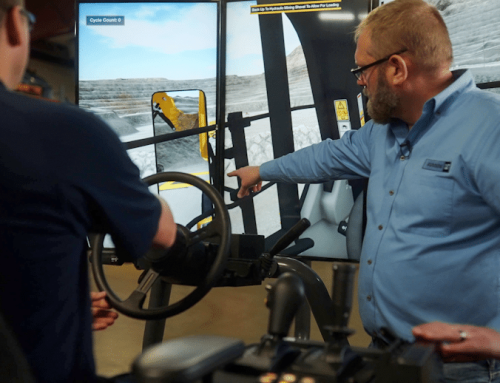
Students enrolled in the Empower College & Career Center’s Heavy Equipment Operator (HEO) pathway in Jefferson, Ga., are gaining practical, hands-on training using Cat® Simulators systems. As one of the first dedicated HEO pathways in the state in 2022, the program is reshaping high school career education in Georgia by providing students with a realistic, simulation-driven experience that builds the real-world skills needed to operate equipment safely and efficiently on real jobsites. They recently expanded the pathway experience by incorporating the Collaborative Worksite Training™ package to help students learn to work together in a simulated environment.
A Vision Backed by Strategic Investment and Regional Workforce Needs
CTAE Director and Empower Assistant Administrator Todd Shultz explained that the program’s momentum began several years ago with a major equipment grant. “We received the heavy equipment grant about four years ago,” said Shultz. “This past year, we received the Top State for Talent grant, which allowed us to purchase the Cat Simulators Articulated Truck system, making it possible to include the Collaborative Worksite Training (CWT) package in our program.”
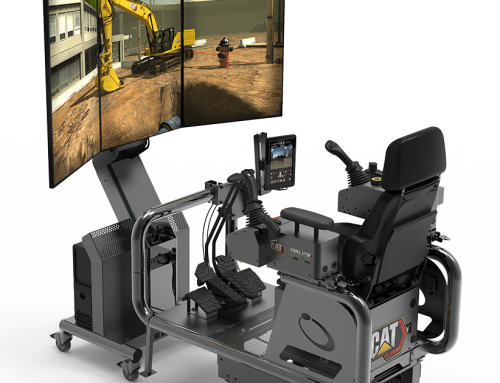
Today, the program operates four Cat Simulators – the Excavator, Dozer and Articulated Truck – that allow students to train collaboratively, just like a real crew. “One student could be running a truck, one could be on a bulldozer and one could be on an excavator,” explained Shultz. “To our knowledge, we are the first in Georgia to have this program up and running.”
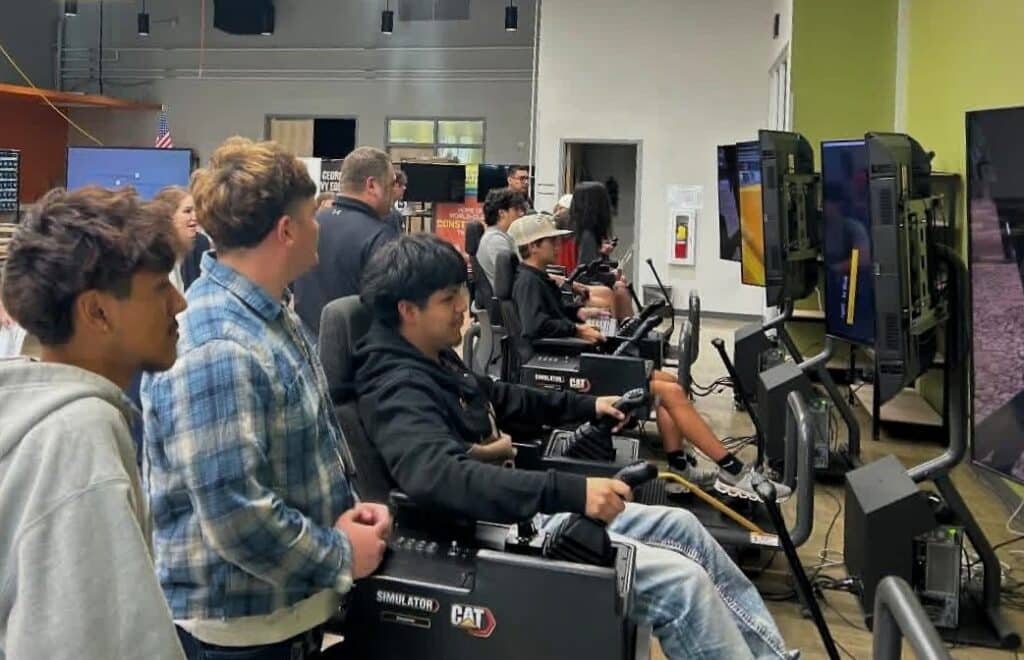
Today, the program operates four Cat Simulators – the Excavator, Dozer and Articulated Truck – that allow students to train collaboratively, just like a real crew. “One student could be running a truck, one could be on a bulldozer and one could be on an excavator,” explained Shultz. “To our knowledge, we are the first in Georgia to have this program up and running.”
Shultz emphasized that the program was built in direct response to the region’s labor demands. Heavy equipment careers are a major workforce need in the area, so Empower intentionally designed its career academy pathways around high-demand, high-skill, high-wage occupations. “We built our programs to align with the careers our students can step into, offering strong earning potential and long-term opportunity,” said Shultz.
Students must be juniors or seniors and at least 16 years old to enroll in the HEO pathway. Each semester, 16 to 18 students complete the program, and to date, approximately 80 students have finished the pathway. Shultz noted that the program has maintained a 100 percent pass rate when students test on live equipment at partner jobsites.
“That is huge. And these are high school kids,” added Shultz. “We have had students who were asked to go to work for $30 an hour right out of high school. The program has been very successful.”
Shultz explained that Empower regularly conducts community needs assessments to ensure the program aligns with local workforce expectations. Employers emphasized the importance of both technical skills and strong employability habits. To address these needs, Empower integrated soft skills into the pathway and required students to meet attendance and professionalism standards to qualify for certification. This approach reinforces the real-world expectations students will face on the job.
Instructor-Led Training Builds Real-World Competence
Matthew Newbold, Empower’s Heavy Equipment Operations instructor, structured the program so students gain deep, machine-specific experience before moving to real equipment. In the fall semester, he teaches three instructional blocks focused solely on Excavator training, giving every student a strong foundation in one of the industry’s most essential machines. In the spring, instruction shifts to Dozer operation, including the Small and Large Dozer models, broadening students’ skills across multiple machine types.
At the end of each semester, students participate in a capstone event in which they transition from simulation to operating live equipment alongside industry partners such as ER Snell, C.W. Matthews, and Vulcan Materials Company. During these evaluations, they operate real machinery under expert supervision and can earn certifications from their employer partners.
Newbold emphasized how critical the simulators are for preparing students for these hands-on experiences. “The simulators allow us to create a safe environment where students can become familiar with the equipment,” he said. “In particular, they feel more comfortable when they get on real equipment because they have trained with actual Cat® controls. They understand how real machines will respond to their actions, which has been very beneficial to them in succeeding in the program.”

SimScholars® Curriculum Helps Students Connect Classroom Learning
“I think the biggest thing I see with the students is that they can easily connect the SimScholars® curriculum to the real world,” explained Newbold. “I have so many students who struggle in traditional classrooms. But when they get in here, they can connect what we are doing to things they have seen on the side of the road or in their own neighborhoods.”
Newbold, who previously taught science, noted the difference in student engagement. “It’s crazy. A student might ask if they will ever use an equation for heat transfer; they might never. But here, they do the walkaround, get familiar, then master the controls and realize they can do this. The progression of the exercises eases them into it so well that almost every student ends the semester confident and comfortable with the equipment.”
He explained that the Collaborative Worksite Training (CWT) environment has further elevated the program. “The Collaborative Worksite Training brought a whole new atmosphere to our classroom,” he said. “Being the first high school to get it was huge. Now, several high schools are following in our footsteps. I am really happy that we were able to pioneer it and keep it going.”
According to Newbold, collaborative scenarios help students understand how real crews work together. “The students learn to rake the green or complete whatever the task is, but there is nothing quite like having the person sitting next to you be the truck you are working with,” he said. “I put them through all sorts of scenarios. I will say, ‘We are going to have two dozers and two excavators, and we are going to trench and dig a pit.’”
Empower’s Schoolwide Project-Based Yearly Learning Event

These scenarios often tie in directly with Empower’s annual schoolwide project-based learning events. “Last year, the project was a tornado, and this year, it was a factory explosion,” explained Newbold. “All our programs respond. Healthcare, automotive, construction, business, audio and video. Everyone.”
“This year, I had my students dig trenches and build high walls to create a contamination area for the factory,” said Newbold, adding that he used the CWT collaborative environment to build teamwork and motivation.
“It is almost like shift work. They have to get it done. It is important,” he said. “It is another moment when students realize this is what they want to do. If they were not sure before, they see the camaraderie and teamwork. The collaboration has opened up so much, and many students have really taken to it.”
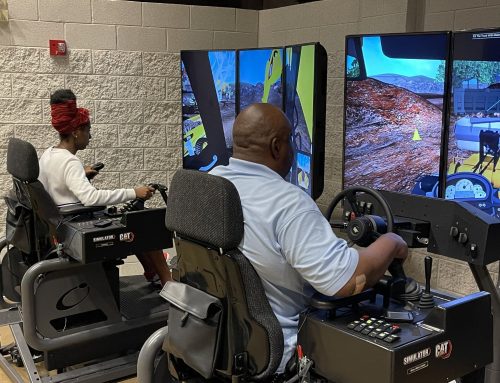
With four simulators in his classroom, Newbold trains students efficiently and intentionally. He pairs students so one operates the simulator while the other observes and learns the technique before taking the controls themselves. “That gives me eight students actively engaged at once,” explained Newbold. “The other half of the class can work on site plans or other essential skills. The simulators are so well organized that they open up what we can teach and how we prepare students for the future.”
Simulation Driven Training That Leads to Real Careers
The Cat Simulators systems give students a safe, realistic way to learn the fundamentals of machine operation before ever stepping into live equipment. Shultz sees the impact every semester. “The simulators let students make mistakes safely and learn from them,” he said. “By the time they get on real equipment, they already understand how the machine responds. That gives them confidence, and employers notice it.”
Empower’s HEO pathway aligns with industry-recognized training standards, including the National Center for Construction Education and Research (NCCER) Heavy Equipment Operations curriculum and the first-ever simulation-based credential for operators. Students graduate with documented simulator performance data, a strong foundation in safety and equipment operation, and experience coordinating with other machines. These skills provide a direct pathway to apprenticeships, technical college programs, or entry-level roles with construction employers actively seeking new talent across Georgia.

Preparing Students for Purposeful Futures
Shultz has seen the program change not only how students train but also how they think about their futures. “A few years ago, if you asked a student what they were going to do after high school, they would say they did not know or simply say they were going to college,” he said. “Today, when kids leave here, they actually have a plan. They know how they are going to work and what they want to do.”
The program celebrates these decisions through its signing program, where students formally commit to either the workforce or college pathways. Shultz recalled one student who completed the heavy equipment pathway while also taking ag mechanics and auto mechanics. “He wanted to work on the equipment, not be the actual operator. But he wanted to learn all the parts before he entered the industry,” explained Shultz. “It’s neat to see kids starting to understand why they are learning everything. That’s important, and it’s a big deal.”
The HEO pathway does more than teach students how to run machinery. It helps them discover their strengths, understand the value of their skills, and step confidently into careers that matter. With Cat Simulators systems, strong community partnerships and a commitment to real-world learning, Empower is preparing Georgia’s next generation of operators with direction, confidence, and a plan for the future.

Soft Skills Strengthen Every Operator
“Our community told us these employability skills were a major need, so we built them into the program,” said Shultz. “Students must show up on time, meet attendance expectations and demonstrate professionalism.”
Local employers consistently emphasized that technical ability alone is not enough. Students must demonstrate professionalism, communication and reliability to succeed on real jobsites. Empower responded by weaving these expectations into daily instruction and into the standards students must meet before earning certification.
Reports across the construction industry reinforce this need. Contractors frequently rank communication, dependability and teamwork as the most important traits for new operators, noting that while machine skills can be taught, work ethic and accountability are far harder to instill.
By holding students to real-world expectations, Empower ensures that graduates enter the workforce with the technical skills to operate equipment and the professional habits needed to succeed on the job. Shultz added, “We make it a priority to listen to our community and industry partners, so students become more than operators. They arrive job-ready.”