Across construction, mining, and resource‑sector operations, one truth remains constant: the safest operators are the ones who learn in safe environments. As companies face rising safety expectations, workforce shortages, and the need for consistent training standards, simulation‑based training has emerged as one of the most effective ways to prepare operators before they ever step into a machine.
From global contractors to universities and mining operations, organizations are turning to Cat® Simulators to reduce risk, strengthen operator awareness, and build a more capable workforce. The experiences of McConnell Dowell, Vancouver Island University (VIU) and Carmeuse are examples of how simulation is reshaping safety culture across the construction and mining industries at scale.
McConnell Dowell Strengthens People Equipment Awareness
Vehicle‑related incidents remain one of the leading causes of workplace fatalities, and despite decades of safety improvements, the risks around heavy equipment persist. McConnell Dowell, a major construction and infrastructure contractor in Australia, recognized that traditional classroom instruction wasn’t enough to shift behavior among its more than 18,000 employees and subcontractors.
Health and Safety Manager Greg Evangelakos saw a clear gap: many workers simply didn’t understand how limited an operator’s visibility can be.
“Some employees and contractors lacked the understanding of plant [equipment] and their blind spots,” explained Evangelakos.
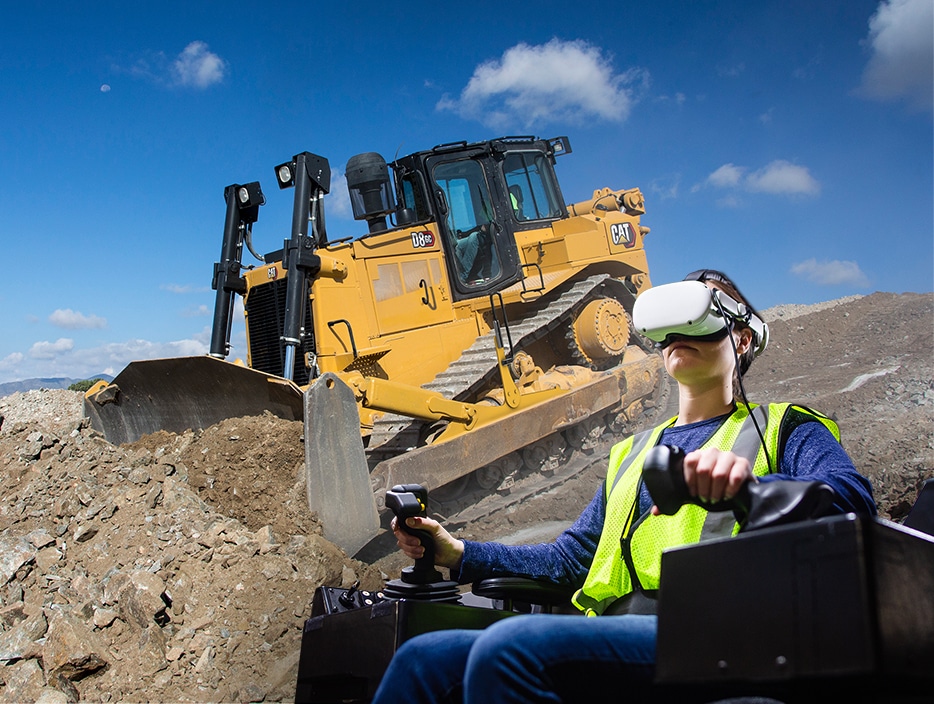
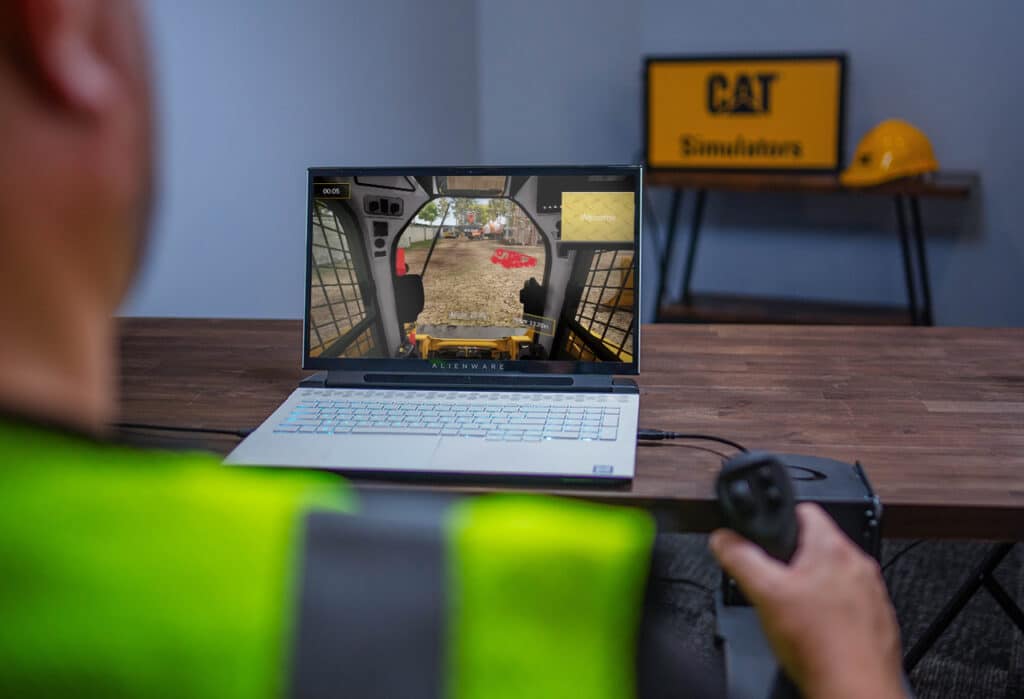
To address this, the company launched the VR Simulator Plant [Equipment] Awareness Program using Cat Simulators SimLite Compact Track Loader and SimLite Excavator systems. Instead of showing photos or diagrams, the team placed workers directly into immersive scenarios where they could experience blind spots, machine movement, and operator challenges firsthand—without any real‑world risk.
The impact was immediate.
“Eight to nine people out of 10 come out with a greater appreciation of how difficult it is to operate the plant,” said Evangelakos. “That’s exactly what we want: respect for the operators and behavior change around the plant.”
The program is now helping McConnell Dowell strengthen people‑plant interaction across its projects, proving that virtual learning can shift culture in ways traditional training cannot.
Vancouver Island University Builds Safer Operators Before They Enter the Field
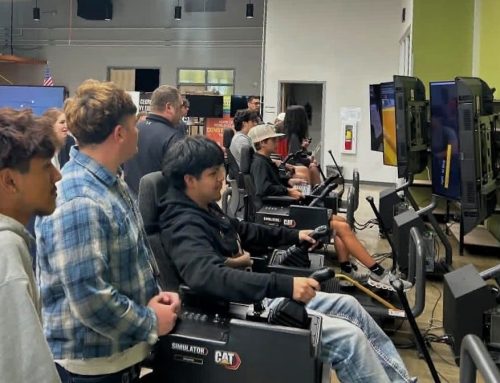
At Vancouver Island University (VIU) in Nanaimo, British Columbia, simulation isn’t an add‑on; it’s the foundation of the school’s Heavy Equipment Operator (HEO) Certificate Program. To date, more than 3,000 students have completed the program, which blends classroom instruction, simulation‑based training, and on‑the‑iron experience.
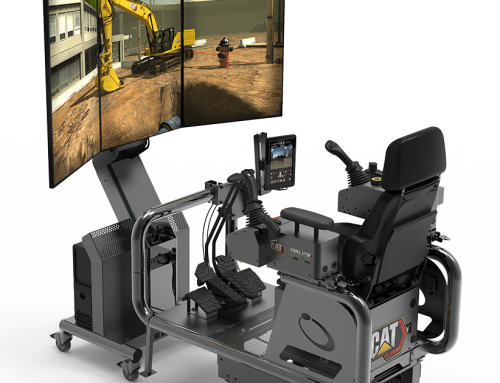
Students train on four Cat Simulators systems—Motor Grader, Dozer, Log Loader and Track Feller Buncher—inside two dedicated trailers, one focused on forestry and one on construction. The program’s structure allows instructors to tailor training to each student’s career path while ensuring everyone builds the same core safety competencies.
“We engage our students with the simulators early on because they offer a safe, low-pressure environment,” explained Kevin Levins, VIU instructor. Levins added that the simulators’ realism is critical to preparing students for the field.
“The simulators’ motion system helps substantially, too, because it gives students a realistic feel of the real machine’s movement,” said Levins.
After nine weeks of simulation and classroom learning, students transition to four or eight weeks of hands-on training on one of 23 pieces of heavy equipment, followed by a work placement. By the time they reach a jobsite, they already understand machine controls, spatial awareness and safe operating habits, reducing risk for both the student and the employer.
Carmeuse Proves That Safety and Productivity Work Together
For more than 160 years, Carmeuse has operated mines and processing facilities around the world. In North America, the company employs 2,500 workers, and about 80 percent operate heavy equipment in open-pit and underground mines. With such a large equipment-focused workforce, safety remains central to the company’s Zero Injury philosophy.
“We really need to make sure our employees are well trained, working safely and working to the same standard across all operations,” said Erin Anderson, Director of Talent and Training. “A big part of that is training in the field with the different Cat Simulators.”
Carmeuse invested in simulators after evaluating both the safety and cost advantages. “We understood the value in both operating cost reductions and increased safety for our operators,” explained Anderson.
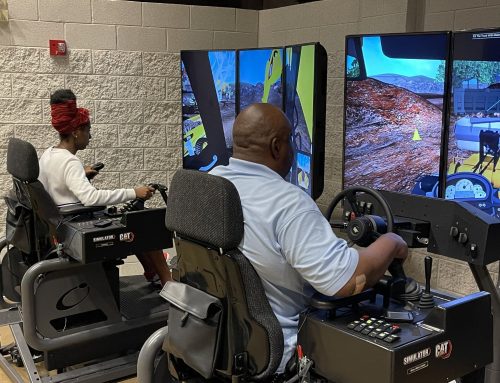
More than 1,000 employees have now trained on the company’s five Cat Simulators. From the start, Carmeuse recognized the inherent safety benefits of using simulators for new operator training and refresher training for experienced employees. The team continues to challenge the long-standing myth that heavy equipment operators cannot be safe and productive at the same time.
With detailed performance data, the Carmeuse team can coach operators on cycle times, loading techniques, and machine handling—improving both safety and efficiency. Their experience demonstrates that when safety is built into training from day one, productivity naturally follows.
A Safer Future Built Through Simulation
Across industries, Cat Simulators are playing a crucial role in enhancing operator awareness well before operators face real-world conditions. Companies are reducing incident rates and near-misses, improving consistency across large workforces, and developing confident, job-ready operators more quickly.
Whether the goal is to improve people-equipment interaction, train new operators, or strengthen safe habits among experienced workers, simulation-based training delivers measurable, scalable outcomes. As shown by McConnell Dowell, VIU, and Carmeuse, the future of operator safety starts long before anyone enters a machine. It starts in a Cat Simulators system.