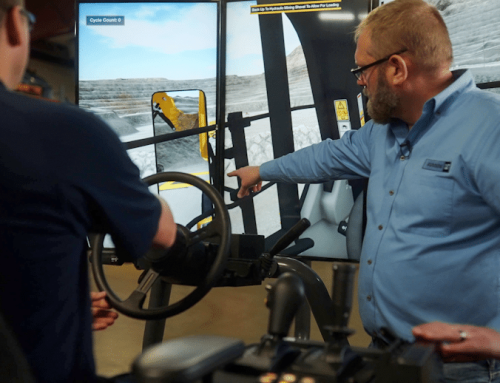
Cat Simulators help Paul D. Camp deliver consistent, high quality operator training at scale
At Paul D. Camp Community College in Franklin, Va., students in the Heavy Equipment Operator (HEO) program receive hands-on training, an industry-aligned curriculum, and a learning environment that prepares them for heavy equipment operation. The program serves a wide range of learners, from recent high school graduates to adults seeking new skills, pursuing a career change, or gaining the confidence to operate equipment safely on their own property.
Skilled Trades Coordinator and Trades Building Manager, Darren Mitchell, has played a key role in developing the program at Camp, which emphasizes hands-on training and practical skill development. “I wear a lot of hats, proudly,” said Mitchell, noting that his background with Cat® equipment and his passion for training help create a learning experience centered on student success.
Students enter the program with a variety of goals. Some are preparing for careers in heavy equipment operations, while others want to strengthen personal abilities or gain familiarity before purchasing their own equipment. With students ranging in age from 18 to 65, the program reflects its broad reach within the community.
“Over the past three years, 20 to 30 students have completed the program,” said Mitchell. “I’m working to bolster awareness of the program.”
A Simulator Driven Training Experience
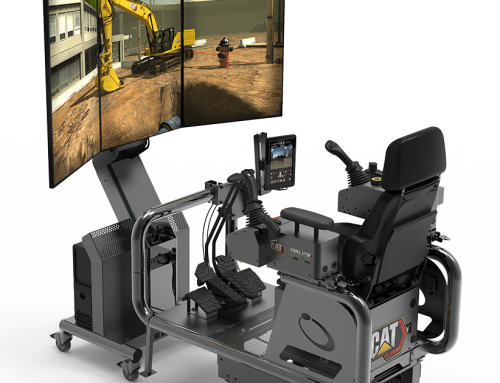
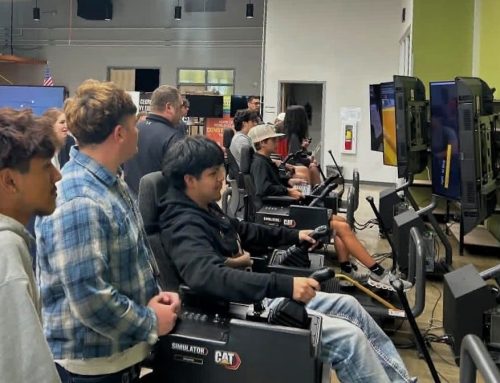
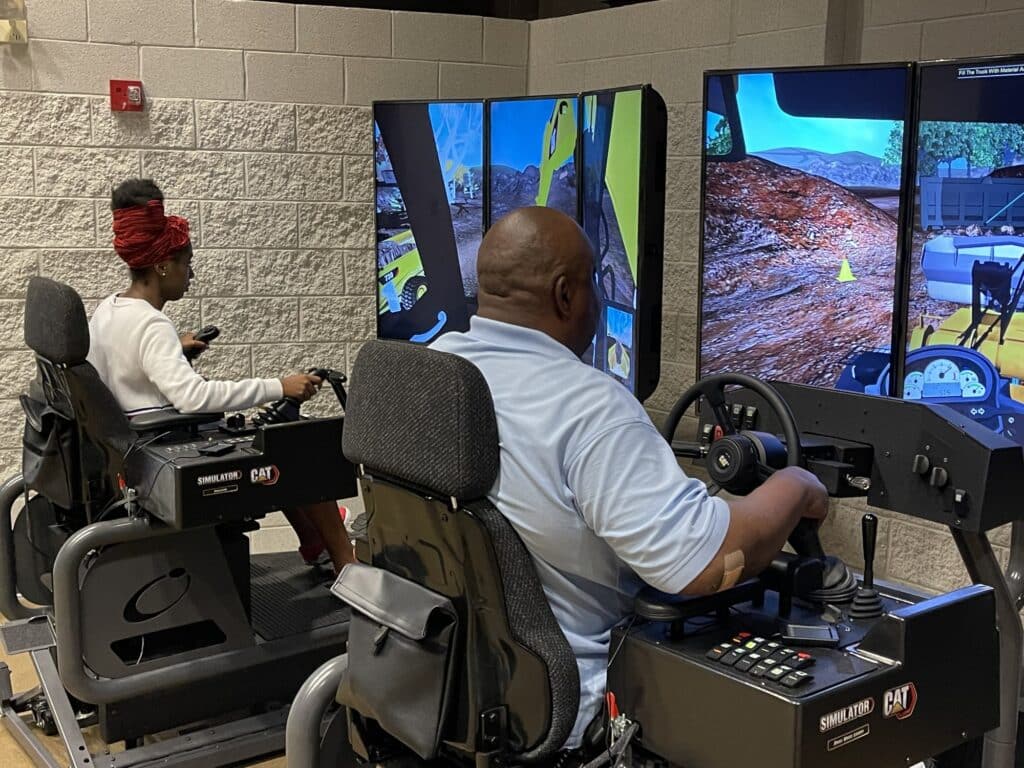
After completing the eight-week NCCER Core Curriculum prerequisite, students attend classes two evenings a week for 10 weeks, during which they receive hands-on training on the college’s Cat Simulators—Dozer, Wheel Loader and Excavator systems—which are central to the Level 1 HEO program.
Students typically complete around 30 hours of simulator time, with flexibility for those who need more practice or advance more quickly.
“I’m a huge believer in the genuine Cat controls. I’ve spent a lot of time on real Cat machines, and the authenticity built into the simulators is outstanding,” said Mitchell. “I’d honestly rate them 12 out of 12. The closer we can emulate the real equipment, the better prepared our students are.”
Mitchell’s instruction emphasizes operational readiness, focusing on safety inspections and control familiarization, as these skills are essential for competent equipment operation.
“I’m big on the pre-operation Walkaround and the Control Familiarization exercises. They are foundational to my program,” explained Mitchell, noting that he relies heavily on the Walkaround inspection exercise. “Students have to pass it, and they keep doing it until they get a full, clean run.”
Mitchell added that this approach ensures that every student builds the muscle memory, awareness and confidence needed before ever stepping onto real equipment.

Powered by Industry Partnerships to Support Local Communities
Local industry partners play a crucial role in sustaining and growing the program. They support the college through grants, funding for books and employment pathways for graduates. “It helps tremendously,” said Mitchell. “They provide that direct link to employment for students who choose to go into heavy equipment operation.”
The college’s HEO program demonstrates what small, rural institutions can achieve with the right blend of technology, industry collaboration and committed leadership. With continued investment in equipment and a growing network of industry partners, the program is poised to expand opportunities for learners across the region.